
Why StellaPop Built Command Hub Around the People Who Built America
In January 1776, an English immigrant named Thomas Paine published a small pamphlet called Common Sense.
It wasn’t a military strategy.
It wasn’t a government document.
It wasn’t written by a president, a general, or a wealthy businessman.
It was simply an idea explained clearly enough that ordinary people could understand it.
History remembers Common Sense because it helped transform confusion into action.
That simple idea became the inspiration behind Stella Command Hub.
Not because we wanted to build software about history.
Because we realized that the challenges facing business leaders today are surprisingly similar to the challenges faced by the people who built a nation from scratch.
The technology has changed.
Human nature has not.
Leaders still struggle with the same questions:
- What is actually true?
- What dangers are approaching?
- What deserves our attention?
- How do we improve?
- Are we asking the right questions?
- Can we afford what we’re planning?
- Will the numbers work?
- How do we keep everyone moving in the same direction?
The people behind Command Hub were chosen because each one represents a leadership function that every organization still needs today.
Honest Abe – The Truth Teller
 Every business wants growth.
Not every business wants the truth.
Abraham Lincoln became one of the most respected leaders in American history because he confronted reality when reality was uncomfortable.
He listened.
He challenged assumptions.
He made difficult decisions when easier ones were available.
The role of Honest Abe inside Command Hub is simple:
Tell the truth.
Not what leaders want to hear.
What they need to hear.
Before a business can improve, it must first understand what is actually broken.
Most companies spend enormous amounts of time looking for solutions.
Very few spend enough time validating the problem.
Honest Abe exists for that reason.
Paul Revere – The Early Warning System
 Most people know Paul Revere because of a horse.
History remembers him for a ride.
What made him valuable was information.
Revere was part of a network.
He gathered intelligence.
Connected signals.
Recognized danger.
Then warned people before it was too late.
Businesses fail for the same reason nations do.
Not because danger arrives without warning.
Because warning signs are ignored.
Declining leads.
Weakening conversion rates.
Customer dissatisfaction.
Operational bottlenecks.
Revenue pressure.
The signs almost always appear before the crisis.
Paul Revere exists to spot them.
Washington Strategy – Choosing the Right Battle
 One of the greatest misconceptions about George Washington is that he won because he was a brilliant battlefield tactician.
Washington lost battles.
Many of them.
What made him extraordinary was his ability to understand priorities.
He knew not every battle needed to be fought.
He knew resources were limited.
He understood timing.
He understood focus.
Business leaders face the same challenge every day.
There are always more opportunities than resources.
More ideas than capacity.
More initiatives than attention.
Washington Strategy exists to answer one question:
Because strategy is not deciding what to do.
Strategy is deciding what not to do.
Franklin Lab – The Experimenter
Benjamin Franklin may have been the first great American optimizer.
- Printer.
- Inventor.
- Scientist.
- Diplomat.
- Writer.
 Franklin’s genius wasn’t intelligence alone.
It was curiosity.
He tested ideas relentlessly.
He understood that improvement rarely comes from opinion.
It comes from experimentation.
Modern organizations often make decisions based on assumptions.
Franklin would have hated that.
Franklin Lab exists because businesses need a structured way to test, learn, improve, and repeat.
Not every experiment succeeds.
But every experiment teaches.
Abigail Advisor – The Question Behind the Question

Abigail Adams may be the most underrated strategic thinker of the founding generation.
While others were drafting laws and leading armies, Abigail was writing letters.
Those letters challenged assumptions.
Questioned decisions.
Identified blind spots.
Improved thinking.
She understood something modern leaders are rediscovering in the age of AI.
The quality of the answer often depends on the quality of the question.
Today that lesson matters more than ever.
AI systems are incredibly powerful.
But they are only as effective as the instructions they receive.
Abigail Advisor exists to help leaders transform vague ideas into clear instructions, clear prompts, and clear outcomes.
Because clarity is still a competitive advantage.
Robert Morris – The Financier
 Revolutions run on ideas.
They also run on money.
George Washington himself often credited Robert Morris with helping keep the Revolution alive financially.
Morris understood something every business owner eventually learns:
Cash flow matters.
Costs matter.
Reality matters.
The Morris Employee Cost Calculator reflects that principle.
Because salary is never the whole story.
The real cost of hiring is almost always larger than people think.
Morris reminds us that good intentions do not replace financial discipline.
Alexander Hamilton – Making the Numbers Work
Hamilton understood economics before America understood economics.
While others debated philosophy, Hamilton built systems.
His focus was practical.
Sustainable.
Measurable.
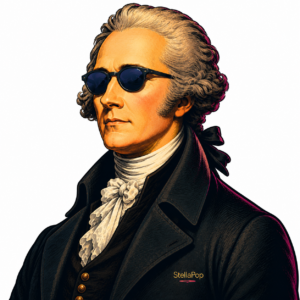
Every business eventually arrives at Hamilton’s question:
When do the numbers work?
That question inspired the Hamilton Break Even Calculator.
Not because break-even analysis is exciting.
Because it is essential.
Vision without math is fantasy.
Hamilton understood that better than most.
Betsy Ross – Alignment
The first American flag was not important because of the fabric.
It was important because of what it represented.
Thirteen separate colonies.
One shared mission.
Alignment.
Every growing organization faces the same challenge.
How do you keep people moving in the same direction?
How do you ensure that effort, resources, and objectives remain connected?
The Betsy Ross Break-Even Calculator reflects that same principle.

Because every successful mission eventually reaches a point where effort and sustainability meet.
Alignment without sustainability fails.
Sustainability without alignment stalls.
Great organizations need both.
Ida B. Wells – The Auditor

Long after the founding generation, another American demonstrated a different kind of courage.
Ida B. Wells built her reputation by examining evidence others ignored.
She investigated.
Verified.
Documented.
Questioned accepted narratives.
That same mindset powers the Social Media Audit platform.
Not assumptions.
Not opinions.
Evidence.
Ida reminds us that good decisions begin with good information.
Why Command Hub Exists
Most software platforms try to do everything.
That usually means they do nothing particularly well.
We took a different approach.
Command Hub is not one giant application.
It is a collection of specialists.
Each focused on a specific leadership function.
- Truth
- Warning
- Direction
- Improvement
- Questions
- Financial discipline
- Alignment
- Verification
The same functions that helped build a nation still help build organizations.
The technology is different.
The leadership challenges are remarkably familiar.
Thomas Paine’s Common Sense succeeded because it transformed complexity into clarity.
That remains our goal.
To help leaders see clearly.
Decide confidently.
And act with purpose.
Two hundred and fifty years later, common sense is still a powerful advantage.